01 / Vitamin A / retinol
Retinol enters tissue biology
Dietary vitamin A is transported and processed across tissue-specific pathways.
Kayothera specializes in inhibiting two historically difficult nuclear receptor pathways: retinoid and rexinoid signaling. Its oral small-molecule approach is designed to block formation of nuclear receptor ligands across cardiometabolic disease, obesity, cancer biology, and other unmet medical needs.
Mechanism
Kayothera focuses on inhibiting the formation of retinoid and rexinoid ligands upstream, before nuclear receptor activation.
01 / Vitamin A / retinol
Dietary vitamin A is transported and processed across tissue-specific pathways.
02 / Upstream ligand formation
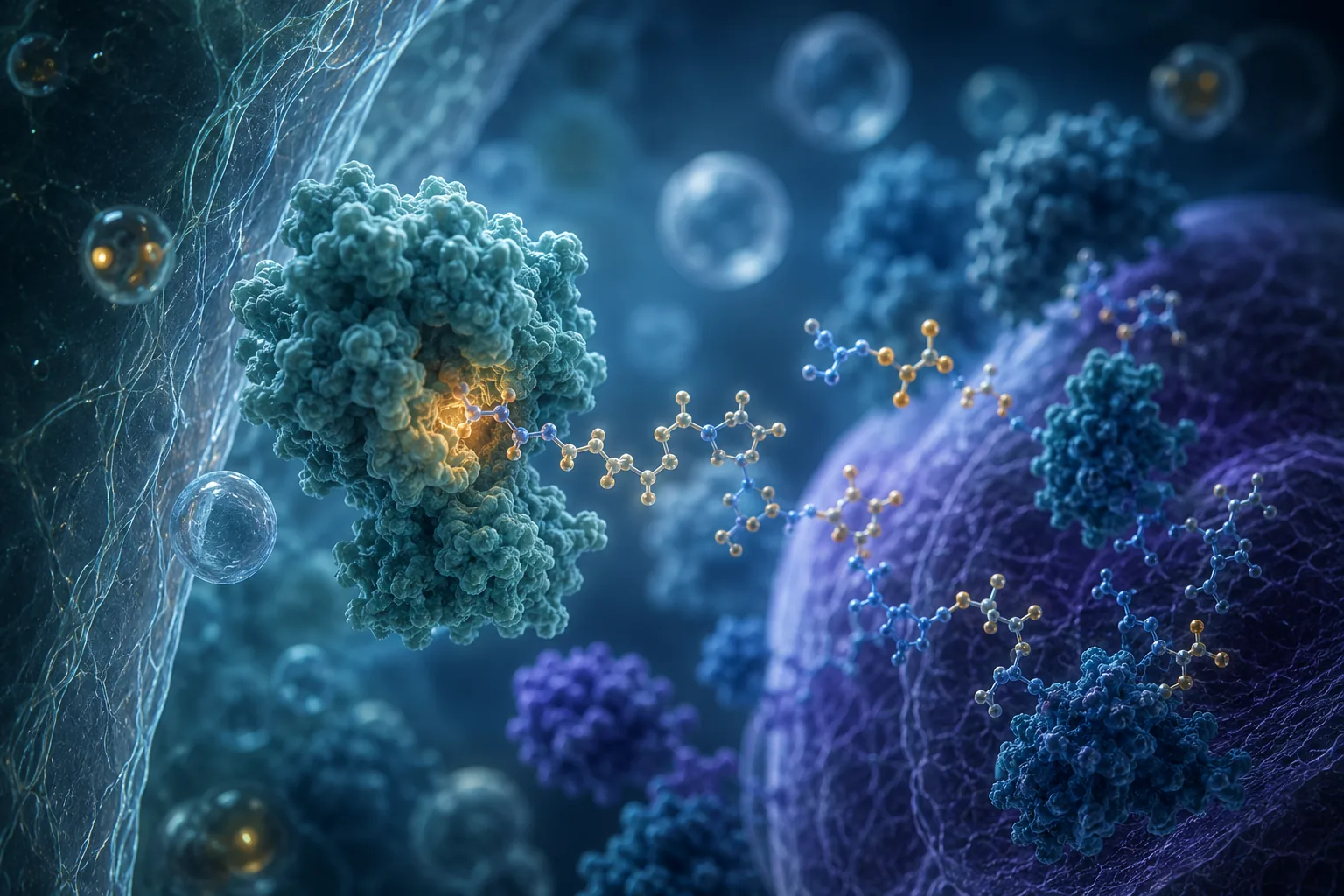
ALDH1a enzymes participate in forming retinoid and rexinoid nuclear receptor ligands.
03 / Nuclear receptor signaling
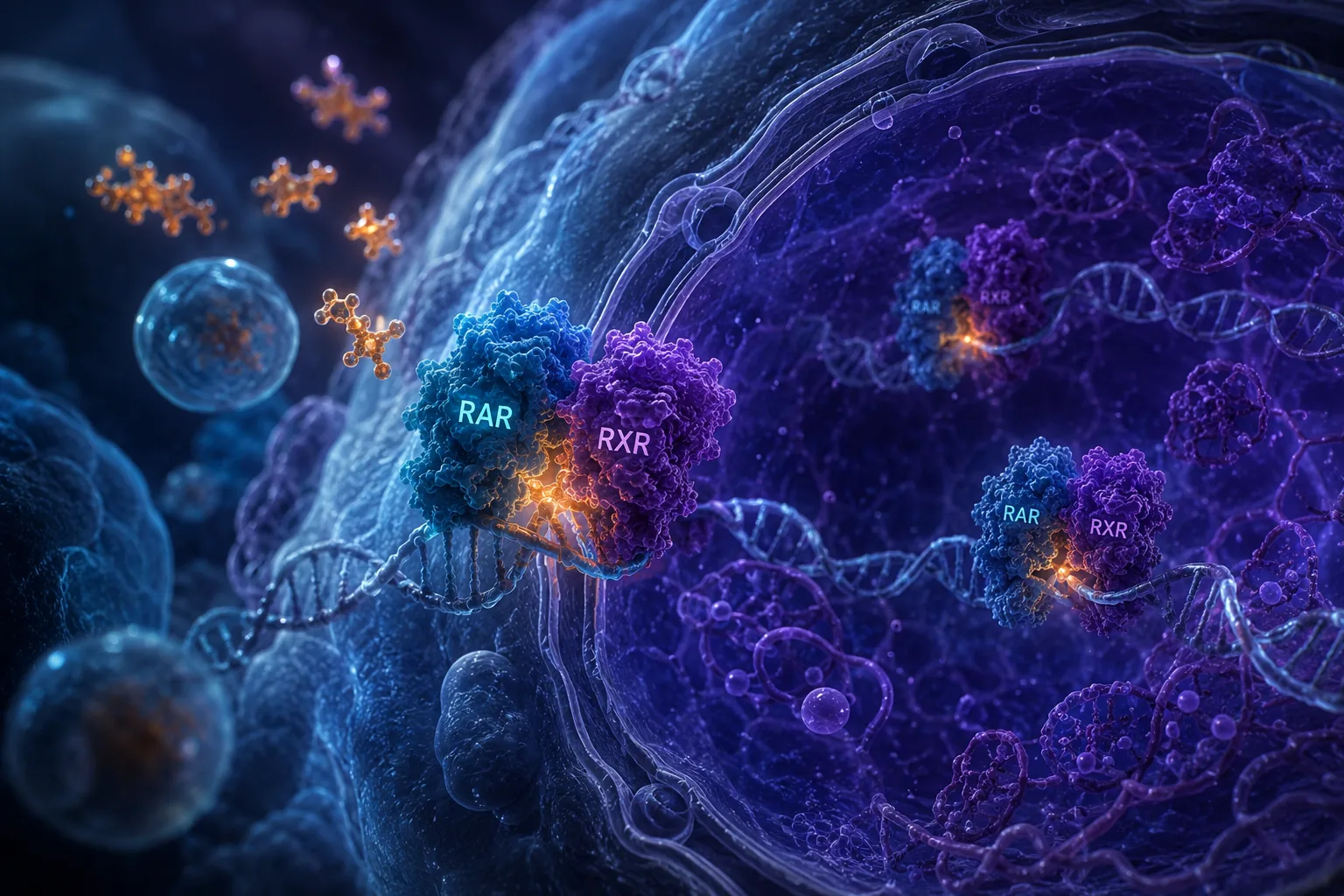
Retinoic acid and rexinoid ligands activate nuclear receptor signaling and transcription.
04 / Multiple disease areas
Scientific evidence connects retinoid signaling with metabolism, immunity, cancer biology, and reproduction.
05 / Inhibition strategy
Kayothera is developing oral small molecules designed to inhibit ligand formation upstream.
01 / 05
Scientific inflection point
For decades, retinoid biology has been studied largely through activation. Kayothera is focused on the other side of the pathway: inhibiting retinoid and rexinoid ligand formation upstream.
Two of the last remaining nuclear receptor pathways to be drugged with inhibitors.
Target ligand formation before RAR or RXR nuclear receptor activation.
A platform rationale spanning metabolism, cancer biology, and reproductive health.
Disease opportunities
ALDH1a3 and beta-cell biology
Explore science →
Rexinoid signaling, adipogenesis and energy expenditure
Explore science →
Retinoid signaling and immune / metabolic tumor biology
Explore science →
ALDH1a2, retinoic acid synthesis and Sertoli cells
Explore science →Pipeline
Three programs connected by one upstream biological foundation.
Current development focus
Designed to inhibit retinoid synthesis in tissues relevant to type 2 diabetes and cardiometabolic disease, with a development focus on beta-cell function and metabolic health.
Current development focus
Designed to target rexinoid pathway biology tied to thyroid function, mitochondrial function, adipogenesis, and energy expenditure.
Current development focus
Designed to inhibit ALDH1a2-mediated retinoic acid synthesis in reproductive biology, with relevance to spermatogenesis and male contraceptive development.
| Program | Disease area | Pathway relevance |
|---|---|---|
| KAYO-1732 | Type 2 diabetes / cardiometabolic disease | Retinoid synthesis / ALDH1a3-related biology |
| KAYO-2000 | Obesity | Rexinoid pathway / ALDH1a1-related biology |
| KAYO-1609 | Male contraceptive / reproductive health | ALDH1a2 / retinoic acid synthesis / Sertoli cells |
Progress + roadmap
Completed milestones build the scientific and organizational foundation for disciplined future development.
Advisory
Key opinion leaders in beta-cell health and type 2 diabetes joined the Clinical Advisory Board.
Science
New research and news advanced understanding of retinoic acid signaling in cancer immunity.
Publication
Research on retinoid nuclear receptor pathway antagonists through targeting ALDH1A3 was published.
Pipeline
KAYO-1732 was selected as a development candidate for type 2 diabetes and cardiometabolic indications.
Development priority
Advance program-specific small molecules and development priorities.
Development priority
Evaluate selected candidates in development-enabling studies.
Development priority
Prepare development packages subject to study outcomes and strategy.
Forward-looking development priorities are subject to study outcomes, regulatory feedback, funding, and company strategy.
View forward roadmap →Investor perspective
Targeting retinoid and rexinoid ligand formation upstream.
A modality designed for development across major disease areas.
Programs in cardiometabolic disease, obesity, and reproductive health.
A roadmap grounded in scientific evidence and program development.
Featured peer-reviewed foundation
A major review connecting retinoid nuclear receptor signaling to cancer biology, metabolic dysfunction, diabetes, obesity, and emerging therapeutic inhibition strategies.
Read the publicationCompany proof
Peer-reviewed work in JEM, iScience, Nature Communications, and other journals.
Scientific and clinical advisors spanning beta-cell health, diabetes, and translational development.
American Diabetes Association Innovation Challenge recognition.
Backed by investors and grant funding supporting company development.
Latest
Key opinion leaders in beta-cell health and type 2 diabetes added to the Clinical Advisory Board.
Read more →Research advances understanding of how all-trans retinoic acid compromises anti-cancer immunity.
Read more →Foundational iScience research on drugging the retinoid nuclear receptor pathway.
Read more →Connect with Kayothera